Step one
Detection
The meter and the cheap suspects go first; then the hidden pipe is located to a spot you can mark.
IDPH licensed work only · Lake in the Hills and southern McHenry County
(847) 994-0824Hidden pipe, located before anything is cut open
Leak detection in Lake in the Hills, IL, where most houses went up after 1990 and the leaks that matter are out of sight: in the buried line from the b-box, behind finished drywall, or hiding inside a quarterly water bill.
What the visit covers
Estimated visit$150‑400
Local crew
Local to Lake in the Hills, not a franchise call center
Local knowledge
East side mains rebuilt 1999 to 2020
Detection, scoped before priced
The finding written down, not a summary
IDPH
License number on every written quote
Below frost. Behind drywall.
Hidden leaks located and marked, with an estimated range given before anyone comes out.
Call (847) 994-0824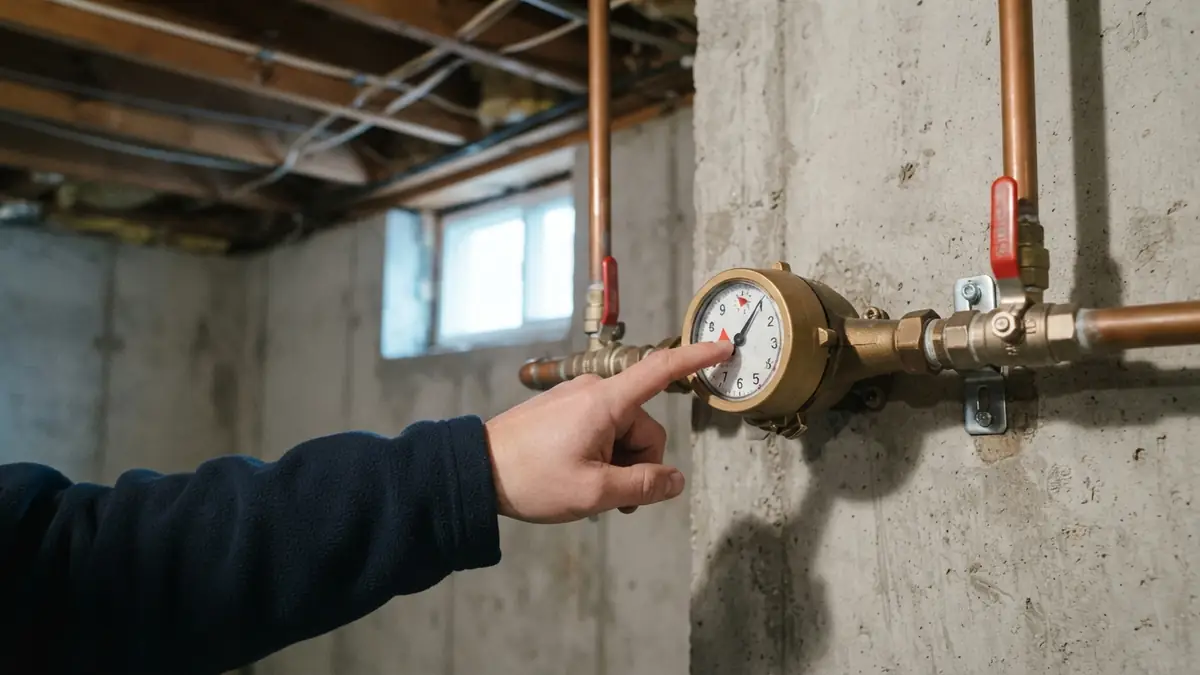
About Rimewell
Randall Road splits this village into two plumbing histories. East of it, around Woods Creek Lake, the village spent 1999 to 2020 replacing old mains that ran behind the houses, moving them into the streets and reconnecting each service in copper. West of it, the subdivisions went up from the early 1990s with everything installed at once, so the pipe in a west-side house is as old as the house. Leak detection in Lake in the Hills starts by asking which side of Randall you are on.
Most of Lake in the Hills went up after 1990, when the village had 5,866 people; it had 28,982 by 2020. Its plumbing is mostly one building era on hard well water, and it leaks out of sight: behind drywall, above a finished ceiling, or in the buried line from the b-box.
What we do
Step one
The meter and the cheap suspects go first; then the hidden pipe is located to a spot you can mark.
Step two
What is checked, and in what order
What we take on
Where this work normally leads, and what that costs.
All servicesWater Line Leak Detection in Lake in the Hills
Here the line splits at the b-box, not at the meter.
Basement Leak Detection in Lake in the Hills
Not every wet basement floor is a plumbing leak.
Wall Leak Detection in Lake in the Hills
A soft ceiling stain under an upstairs bathroom is the version local neighbor groups ask about.
Emergency Leak Detection in Lake in the Hills
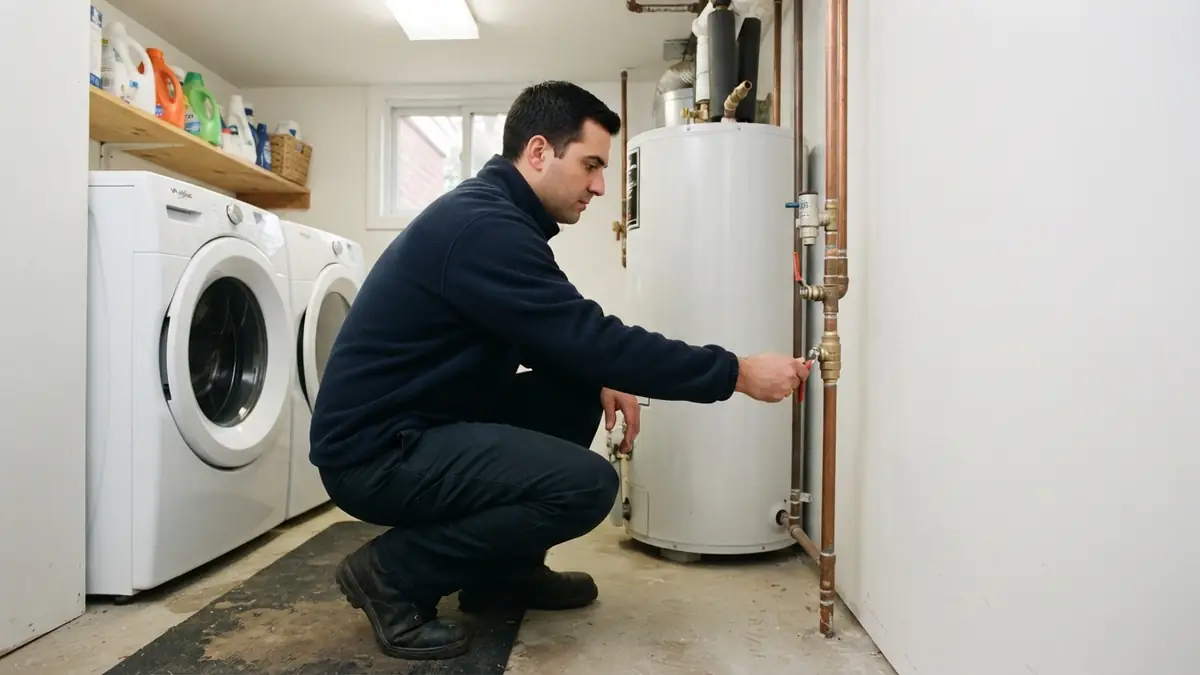
Two valves matter tonight: your main shutoff and the b-box.
Costs
Expect an estimated $150 to $400 to have a hidden leak found and marked; a repair, if you want one, is priced on its own. Where a visit lands depends on how many places the water could be coming from, and on what you have already ruled out.
Leak Detection
$150 - $400
Estimated - same or next workday
Basement Leak Detection
$150 - $450
Estimated - same or next workday
Wall Leak Detection
$200 - $400
Estimated - same or next workday
Every figure here is an estimated range. Your own number comes as a written quote, agreed before any work.
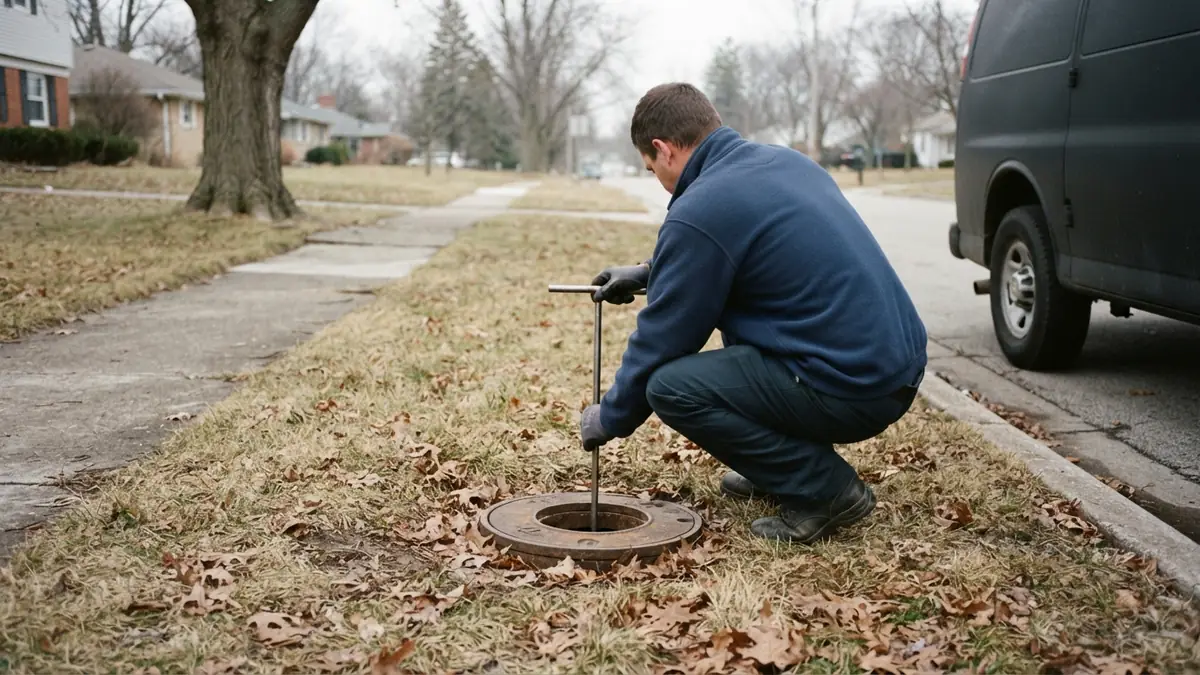
The route
Hidden leaks located and marked, with an estimated range given before anyone comes out.
Read the red flow indicator
Everything off, softener included, then look at the meter head. If the red indicator turns, water is leaving past the meter. Check the toilet flappers too; the village names them as the usual cause.
Tell us where the meter is
An indoor meter cannot see the buried line from the b-box, so where yours sits decides which tests come first. A stain or an odd bill is enough to start.
We isolate, then listen and scan
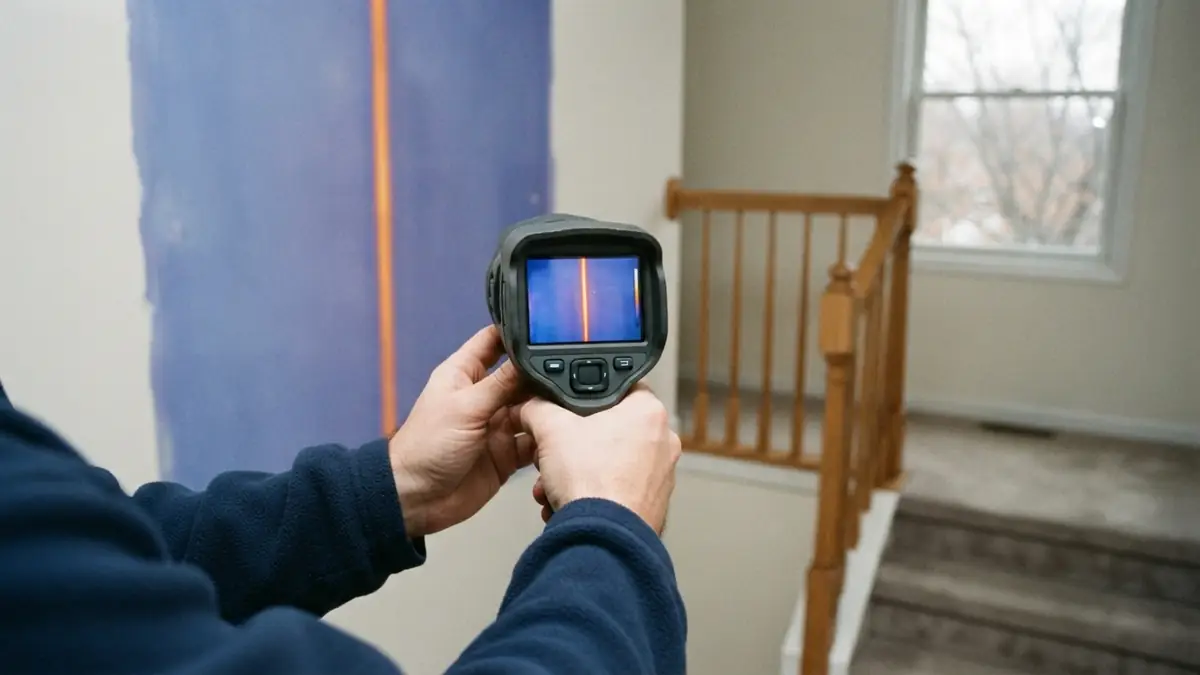
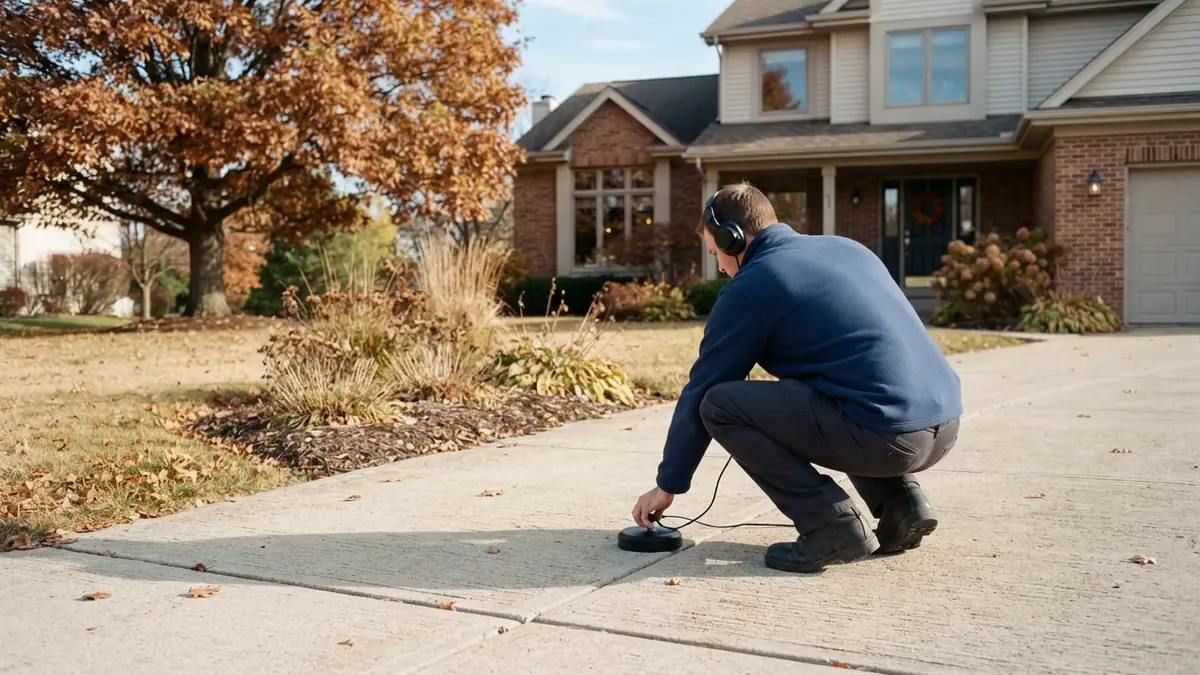
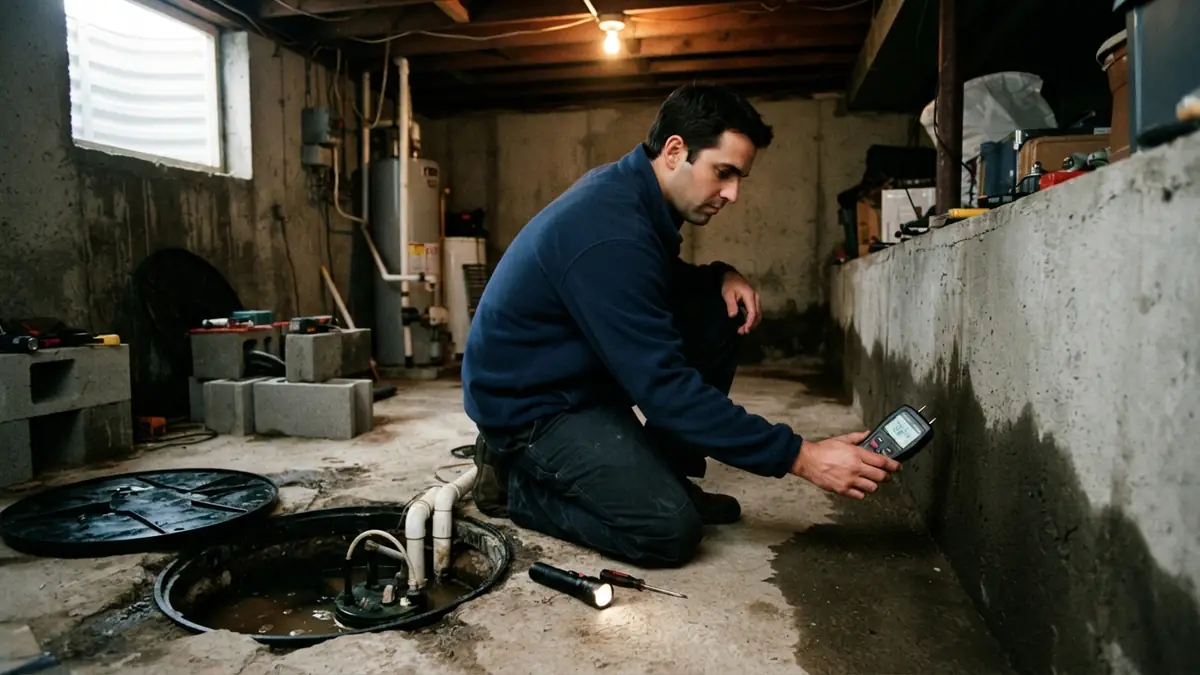
Valves close one section at a time until one branch is left. Then acoustic listening, thermal imaging and moisture readings, or a pressure test and tracer gas outside.
The spot is marked and written up
The location is marked on the wall, floor or lawn, with the readings that found it. Any repair is quoted separately, and the finding is yours to use.
Worth asking anyone
Every question here tests the method, since a marked spot can be checked and a hunch cannot.
Will you read the meter with me first?
The flow indicator is the cheapest diagnostic there is, and starting with it keeps a visit short.
Do you know where the village's pipe ends?
Here it ends at the b-box, not the meter. That boundary decides who repairs what, so it is worth hearing it stated correctly.
Is the repair priced separately?
It should be. Kept apart, the finding can go to whichever licensed plumber you choose.
What will you open, and how big?
After thermal and moisture readings, one small opening in a known spot. If nobody can say where, the locating is not finished.
Quarterly billing can hide a leak for weeks; the red flow indicator on the meter shows it today
Where we work
Lake in the Hills and ten of its subdivisions, from Spring Lake Farms and Big Sky, among the first, to Greenshire, still growing after 2017.
Questions
Something not covered here?
Put it to us by phone. Plain answers, an estimated range and nothing to sign.
Call (847) 994-0824By isolating first and listening second. Closing valves section by section while watching the flow indicator narrows the house to one branch; acoustic listening, thermal imaging and moisture readings then find the spot.
Yes, if you can see or hear water escaping: close the main shutoff. If the bill is your only clue, leave the water on until the flow indicator has been read.
For most houses in the village, somewhere in an estimated $150 to $400 band, and any repair is priced on its own. The buried line from the b-box runs an estimated $200 to $500, because it sits three feet or more down. No local average has been published, and anything you rule out before the visit brings the figure down.
Usually a toilet, sometimes a softener, occasionally a hidden pipe. The village names the toilet flapper as the leading cause, and a softener stuck in its cycle can run water to the drain for hours. Bills here are quarterly, so a jump can be three months of a small problem.
Start with where the meter is. If it is outside, watch the flow indicator, then close the main valve inside; still turning means the buried line. If it is inside, the buried line never shows on it, so look for a soft strip of lawn, seepage where the pipe enters, or pressure that sags everywhere.

Call for a free quote. The estimated range comes while we talk, and if the flow indicator says there is nothing to find, you hear that too.
Talk to us
Call now
(847) 994-0824Hidden leaks located and marked, with an estimated range given before anyone comes out.
Before you call
Where we work
Every area we cover